Solar Infrastructure Portfolio: Institutional-Grade Assets Guide
Solar Infrastructure Portfolio: Building Institutional-Grade Distributed Energy Assets
A solar infrastructure portfolio brings together various solar generation assets. This creates a single, investable structure that offers predictable long-term cash flows. For institutional investors seeking exposure to distributed rooftop solar infrastructure in Europe, understanding how these portfolios are built is key. They differ greatly from standalone project development, and knowing why is essential. The distinction is important. It decides if distributed solar can draw the same investment as traditional infrastructure, such as transmission networks or large-scale generation.
Europe’s distributed solar market has reached a critical inflection point. SolarPower Europe reports that by the end of 2024, the EU exceeded 400 GW of total solar capacity. More of this capacity is coming from commercial and industrial rooftops. Yet despite this scale, most rooftop assets remain fragmented across thousands of independent installations. The challenge is no longer deployment, but instead structure.
Why Solar Infrastructure Portfolio Formation Matters Now
The economics of distributed solar have fundamentally shifted. Eurostat data shows that non-household electricity prices across the EU remain structurally higher than the historical averages of the previous decade. For SMEs operating warehouses, logistics centres, and manufacturing facilities, rooftop solar is no longer a sustainability initiative, it is an operational necessity that provides pricing visibility and reduced exposure to volatility.
This demand-side pressure creates the foundation for solar infrastructure portfolio development. When hundreds of SMEs require on-site generation, the opportunity emerges to aggregate these individual installations into portfolios with institutional characteristics. The transformation from fragmented assets to institutional-scale infrastructure requires more than capital, it requires a platform approach.
What distinguishes a solar infrastructure portfolio from a collection of solar projects? The answer lies in three structural elements: contracted revenue through long-term power purchase agreements, geographic and counterparty diversification, and operational standardisation that enables repeatable deployment. When these elements combine, distributed assets begin to exhibit the characteristics that infrastructure investors require – stable yields, long duration, and inflation linkage.
Structural Challenges in Building a Solar Infrastructure Portfolio
Aggregating distributed solar into institutional-grade portfolios presents challenges that utility-scale development does not face. Each rooftop installation involves a different building owner, permitting environment, grid connection, and operational context. Building one system is straightforward. Building two hundred systems with consistent quality and timeline requires something fundamentally different, an operational infrastructure.
The execution complexity explains why Europe’s rooftop solar market remains fragmented despite massive potential. Industry estimates suggest Europe has approximately 2-3 TWp of rooftop solar potential, representing several times the current installed capacity. Yet most of this potential sits across SME buildings that are difficult to access individually and even harder to aggregate systematically.
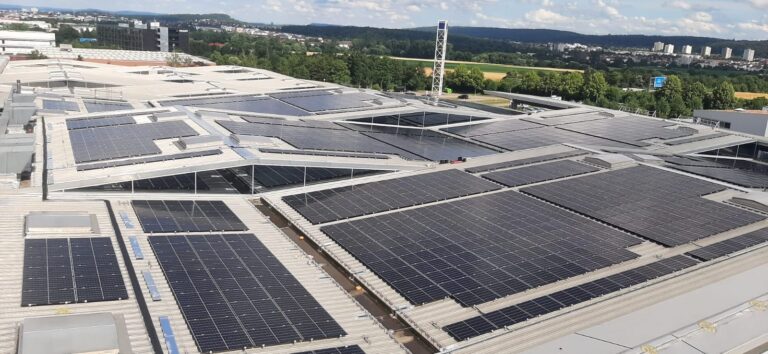
Platforms like ENSOOL’s distributed solar platform are emerging to address this structural gap. The model involves securing long-term rooftop access from SMEs, deploying standardised solar systems, contracting long-duration PPAs, and aggregating the resulting assets into portfolios. This approach transforms what would otherwise be isolated installations into a solar infrastructure portfolio with characteristics that match institutional requirements.
Grid constraints add another dimension. Utility-scale solar projects increasingly face connection queues stretching years into the future, while distributed rooftop systems can be deployed in weeks. This fast deployment allows distributed solar portfolios to grow quicker and earn revenue sooner than utility-scale ones. This is important for investors who care about capital efficiency.
Solar Infrastructure Portfolio Models: A Comparison
Not all approaches to building a solar infrastructure portfolio are equivalent. The table below compares the traditional project-by-project model with the emerging platform aggregation approach that is reshaping how institutional capital accesses distributed solar.
| Characteristic | Project-by-Project Development | Platform Aggregation Model |
|---|---|---|
| Scale approach | Individual site development | Repeatable process across hundreds of sites |
| Revenue structure | Site-specific contracts | Diversified PPA portfolio |
| Counterparty risk | Concentrated in single offtakers | Spread across many SME counterparties |
| Operational model | Varies by installation | Standardised across portfolio |
| Institutional accessibility | Limited – too small individually | High – aggregated into fundable scale |
| Deployment timeline | Variable, project-dependent | Predictable through process standardisation |
Forward Outlook for Solar Infrastructure Portfolios
The conditions for forming solar infrastructure portfolios in Europe are better than ever. Energy price volatility continues to drive SME adoption. Grid congestion is increasing the value of local generation. Institutional investors are actively seeking contracted infrastructure yield with inflation protection. Global Infrastructure Hub says that over $15 trillion will be needed for infrastructure by 2040. A larger part of this will focus on energy transition assets.
The markets showing strongest potential for distributed rooftop solar infrastructure include Germany, Poland, Italy, and the Netherlands – each combining strong solar resources with substantial commercial and industrial building stock. Poland stands out particularly, offering supportive policy conditions for distributed generation alongside a large industrial base with significant rooftop inventory.
For infrastructure fund managers and energy developers, the strategic question is no longer whether distributed solar belongs in institutional portfolios. The question is how to access it at scale. The answer increasingly points toward platform models capable of transforming fragmented rooftop assets into solar infrastructure portfolios that meet institutional standards for predictability, scale, and long-term yield.
Frequently Asked Questions
What qualifies as a solar infrastructure portfolio for institutional investors?
A solar infrastructure portfolio for institutional investors needs:
Combined capacity from various sites
Long-term revenue contracts through PPAs
Diverse counterparty exposure
Standard operational processes
The portfolio should show steady cash flows. Its duration and scale must make sense for institutional checks and transaction costs.
How do distributed solar portfolios compare to utility-scale solar investments?
Distributed solar portfolios offer faster deployment timelines and reduced grid connection risk compared to utility-scale projects. However, they require platform capabilities to aggregate many smaller assets. Utility-scale projects offer simpler single-asset structures but increasingly face permitting delays and connection queue constraints across European markets.
What returns can investors expect from a solar infrastructure portfolio in Europe?
Returns vary based on contract structure, geography, and portfolio composition. Industry participants say that well-organised distributed solar portfolios with long-term PPAs can provide stable, infrastructure-like yields linked to inflation. However, returns vary based on market conditions, financing costs, and operational efficiency.
Why is aggregation necessary for rooftop solar to attract institutional capital?
Individual rooftop installations are typically too small to justify institutional transaction costs and due diligence requirements. Aggregation creates portfolios of sufficient scale while diversifying counterparty and geographic risk. Without aggregation, distributed solar remains invisible to institutional capital despite representing substantial generation capacity.
Which European markets offer the strongest opportunity for solar infrastructure portfolio development?
Germany, Poland, Italy, and the Netherlands have the best conditions for developing distributed solar portfolios. These markets have high electricity prices, helpful policies, lots of commercial rooftops, and strong solar supply chains. Poland particularly stands out for its combination of industrial base and growth trajectory.