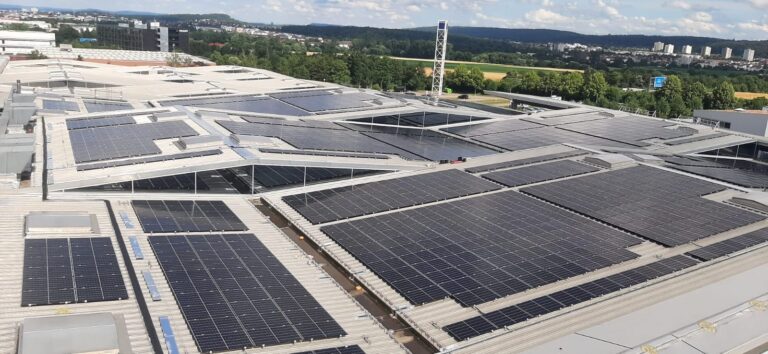
European Solar Infrastructure: From Fragmentation to Scale
European Solar Infrastructure: The Structural Gap Between Capacity and Investability
European solar infrastructure has reached an inflection point where installed capacity no longer represents the primary constraint. According to SolarPower Europe, the EU exceeded 400 GW of total solar capacity by the end of 2024, with distributed rooftop systems accounting for a growing share of new installations. Yet despite this scale, most distributed solar assets remain difficult for institutional capital to access, not because they lack generation potential, but because they lack the aggregation structures that transform fragmented installations into investable portfolios. The challenge facing the market today is fundamentally structural: how to convert thousands of independently owned rooftop systems into institutional-grade infrastructure.
The Scale of European Solar Infrastructure Opportunity
Europe’s rooftop solar potential is about 2 to 3 TWp, based on industry analyses. This is several times more than what’s currently installed. This represents one of the largest untapped energy infrastructure opportunities on the continent. Markets like Germany, Poland, Italy, and the Netherlands keep pushing deployment. Commercial and industrial buildings stand out as very active segments.
The economics supporting this expansion have shifted permanently. Eurostat data shows that non-household electricity prices in the EU are still higher than historical averages, despite recent stabilisation. For SMEs, this pricing environment changes rooftop solar from a nice-to-have to a must-have. It provides pricing clarity, lowers reliance on the grid, and gives more control over operating costs.
What distinguishes this moment is the convergence of multiple structural forces. Energy price volatility continues to push commercial consumers toward self-generation. Grid congestion increasingly favours local production over utility-scale imports. Institutional investors actively seek contracted infrastructure yield with long-duration visibility. These conditions create the foundation for distributed rooftop solar infrastructure in Europe to mature from a fragmented installation market into a scaled asset class.
Why European Solar Infrastructure Remains Fragmented
The paradox of European distributed solar is that assets exist at significant scale but remain largely invisible to institutional capital. Most rooftop systems are locally developed, independently owned, and operationally disconnected from one another. Each installation represents an isolated project rather than a component of a broader portfolio.
This fragmentation creates real barriers to investment. Individual rooftop systems rarely meet institutional ticket sizes. Counterparty risk concentrates around single offtakers. Operational complexity multiplies across diverse building types, ownership structures, and regulatory environments. The result is an asset base that behaves like thousands of small projects rather than infrastructure.
Contrast this with utility-scale solar, where single assets can reach hundreds of megawatts with standardised contracts and established financing structures. Distributed solar has clear benefits. It deploys quickly, reduces grid reliance, and generates revenue right away. However, it faces challenges when competing for institutional funding.
Platforms like ENSOOL’s distributed solar platform are emerging to address this gap, aggregating SME rooftops into portfolios with long-term power purchase agreements that provide the contracted cashflow visibility institutional investors require.
| Characteristic | Fragmented Installation Model | Aggregated Platform Model |
|---|---|---|
| Asset ownership | Independent, dispersed | Centralised portfolio structure |
| Counterparty exposure | Single offtaker per site | Diversified across hundreds of contracts |
| Operational approach | Site-by-site management | Standardised processes at scale |
| Revenue visibility | Variable, short-term | Long-duration PPA contracts |
| Institutional accessibility | Below typical ticket sizes | Portfolio-scale investment opportunity |
| Scaling mechanism | Linear project-by-project | Repeatable deployment system |
The Path Toward Institutional-Grade European Solar Infrastructure
The transition from fragmented installations to institutional infrastructure requires more than capital; it requires platform capability. Building one rooftop solar system is straightforward. Repeating that process across 200 sites with different building types, ownership structures, permitting environments, and operational constraints is fundamentally different.
Scale in distributed energy does not emerge from larger individual assets. It emerges from systems that can execute the same deployment process consistently across many sites while maintaining quality and timeline predictability. This distinction separates project developers from infrastructure platforms.
Execution capability becomes the differentiating factor. When distributed assets can be standardised, aggregated, and operated as portfolios, they stop behaving like projects and start behaving like infrastructure. The cashflow profile shifts from variable and project-specific to predictable and portfolio-diversified. That transition is what enables institutional capital allocation.
Market selection also matters for platform formation. Poland shows the right conditions for fast growth in distributed solar energy. It has strong sunlight, friendly policies for local generation, many industrial rooftops, and rising energy prices pushing SMEs to adopt solar. Markets combining these characteristics offer clear pathways toward building long-term YieldCo-scale portfolios.
The deployment advantage of distributed solar becomes increasingly significant as grid constraints tighten. While utility-scale projects face connection queues stretching years in some markets, rooftop systems can move from contract to commissioning in weeks. Faster deployment leads to quicker revenue and boosts portfolio growth. This advantage builds up over time.
Frequently Asked Questions
What is the current size of Europe’s rooftop solar market?
According to SolarPower Europe, the EU exceeded 400 GW of total installed solar capacity by the end of 2024, with distributed rooftop systems representing a growing share of annual additions. Industry estimates suggest Europe’s total rooftop solar potential ranges from 2–3 TWp, indicating significant remaining headroom for deployment across commercial and industrial buildings.
Why do institutional investors find distributed solar difficult to access?
Most distributed solar assets remain below institutional ticket sizes when considered individually, typically ranging from hundreds of kilowatts to low single-digit megawatts per site. The fragmented ownership structure, diverse counterparty profiles, and lack of standardised contract terms create due diligence complexity that does not scale efficiently. Aggregation platforms that bundle assets into portfolios with long-term PPAs address these barriers by providing the scale and cashflow predictability institutional allocators require.
How does distributed solar compare to utility-scale for grid connection timelines?
Utility-scale solar projects in constrained European markets can face grid connection queues extending several years, creating significant delays between development and revenue generation. Distributed rooftop systems bypass much of this congestion by generating power at the point of consumption, often moving from contract signing to commissioned operation within weeks. This deployment speed advantage makes distributed solar increasingly attractive as grid infrastructure bottlenecks intensify.
What makes a distributed solar portfolio institutional-grade?
Institutional-grade classification typically requires portfolio scale sufficient to meet allocation thresholds, diversified counterparty exposure across multiple offtakers and geographies, long-duration contracted revenue through PPAs, and standardised operational processes enabling consistent asset management. The combination of predictable cashflows and diversified risk profiles allows distributed solar portfolios to compete for infrastructure allocations alongside traditional energy assets.
Which European markets offer the strongest conditions for distributed solar scaling?
Markets combining strong solar irradiance, supportive distributed generation policy, large commercial and industrial building stock, and persistent energy price pressure tend to offer the most favourable conditions. Germany, Poland, Italy, and the Netherlands consistently rank among the most active deployment markets, with Poland emerging as particularly attractive due to its combination of scale potential, policy support, and industrial rooftop availability.
European solar infrastructure now faces a new challenge: structure. Technology, economics, and demand are no longer the limiting factors. The assets exist. The capital is available. What remains is the aggregation layer that connects distributed generation to institutional investment. As platforms capable of deploying, retaining, and scaling rooftop portfolios mature, distributed solar will complete its transition from a fragmented installation market to a core component of Europe’s energy infrastructure.