Distributed Rooftop Solar Infrastructure Platform Gap in Europe
Distributed Rooftop Solar Infrastructure: The Platform Layer Europe Still Lacks
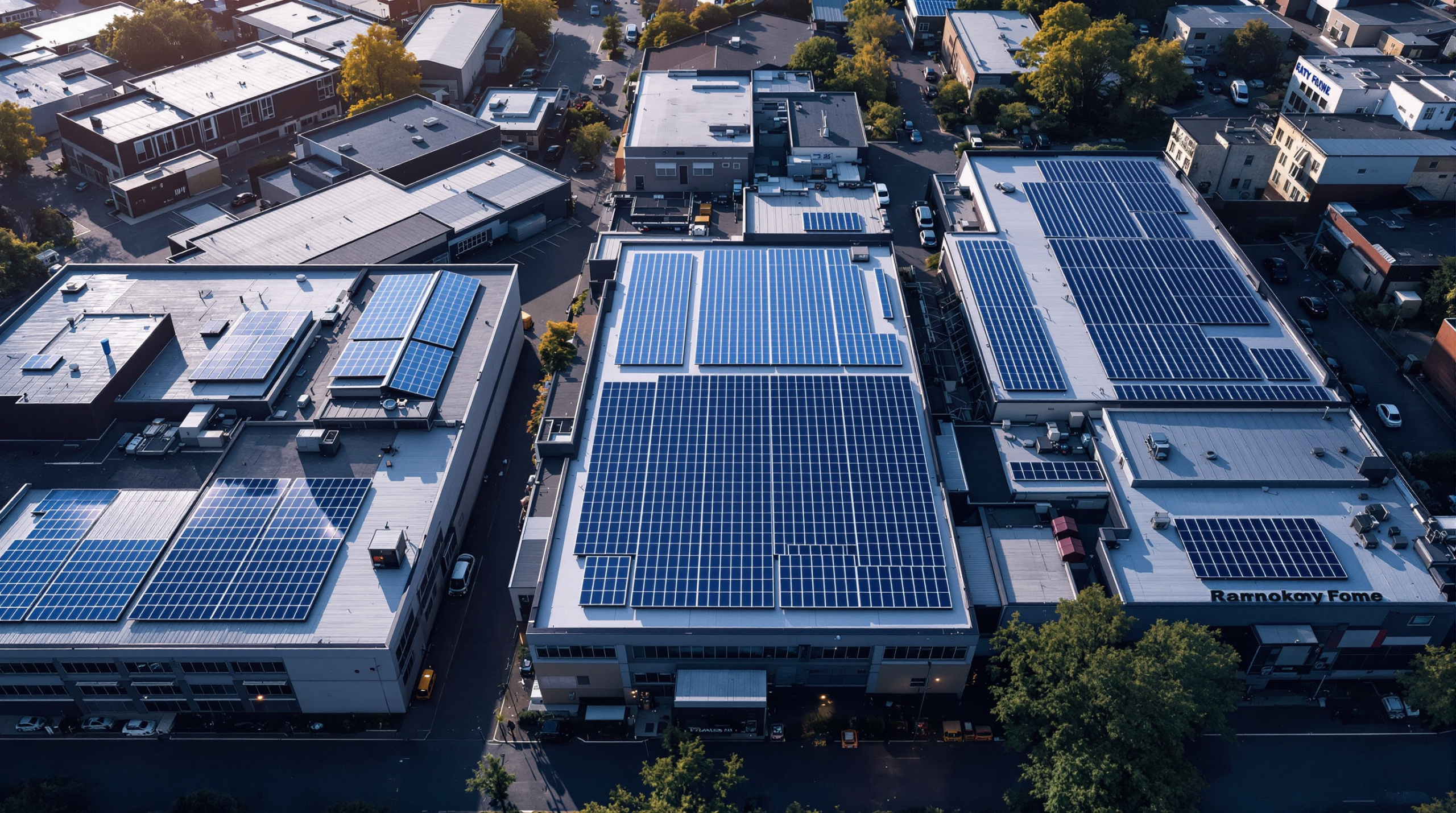
Distributed rooftop solar is one of Europe’s biggest untapped energy assets. But it is still hard for institutional capital to access. An estimated 2-3 TWp of rooftop solar potential is available on commercial and industrial buildings across the continent, says SolarPower Europe. The assets exist. The demand exists. What’s missing is the aggregation layer. It needs to turn thousands of fragmented installations into investable infrastructure portfolios. This structural gap shows the current market opportunity. It explains why distributed rooftop solar is now catching the eye of infrastructure investors looking for long-term, stable returns..
The Scale of Distributed Rooftop Solar Infrastructure in Europe
Solar capacity across Europe continues to expand rapidly. By the end of 2024, total EU solar capacity surpassed 400 GW. Distributed generation made up a larger part of new installations. Markets including Germany, Poland, Italy, and the Netherlands are seeing particularly strong commercial and industrial rooftop deployment. For a comprehensive overview of this opportunity, see our analysis of distributed rooftop solar infrastructure in Europe.
Yet despite this growth, the market structure has not kept pace. Most distributed rooftop solar infrastructure remains locally developed, independently owned, and operationally disconnected. Individual installations may perform well, but they sit outside any portfolio framework. This fragmentation creates a fundamental barrier: institutional investors cannot efficiently access distributed solar because it does not behave like infrastructure.
The distinction matters. Infrastructure investment requires predictable cashflows, diversified counterparty exposure, and operational consistency across assets. A single rooftop installation, however well-constructed, cannot offer these characteristics. Distributed assets only meet institutional requirements when they’re grouped into portfolios with standardised contracts and centralised operations. This is the transition now underway, and the structural gap that platforms like ENSOOL’s distributed solar platform are designed to address.
Why Fragmentation Persists Despite Market Growth
The persistence of fragmentation in distributed rooftop solar infrastructure is not accidental. It reflects the complexity of scaling across heterogeneous assets. Rooftop solar is different from utility-scale solar. A single utility project can provide significant capacity, but rooftop solar needs coordination. It involves many sites, partners, and regulations.
Each installation involves site assessment, structural evaluation, permitting, grid connection, and long-term offtake contracting. Multiply this across 200 or 500 sites, and the operational challenge becomes clear. Different building types. Different ownership structures. Different local permitting regimes. Without standardised processes, execution complexity compounds faster than revenue scales. As we explored in European Solar Infrastructure: From Fragmentation to Scale, this operational challenge has historically prevented distributed solar from reaching institutional scale.
This is why distributed rooftop solar infrastructure has remained project-based rather than portfolio-based. The model requires platform thinking – repeatable processes that work across geographies and counterparties while maintaining quality and timeline consistency. That platform layer is what the market currently lacks.
The Investment Case for Aggregated Distributed Solar
From an institutional perspective, the investment thesis for distributed rooftop solar infrastructure rests on several converging factors. Energy price volatility across Europe continues to drive SME demand for on-site generation and long-term price visibility. Grid congestion is increasing the value of generation at the point of consumption. Deployment speed benefits distributed assets. Rooftop systems can be set up in weeks. In contrast, utility-scale projects may wait years in some markets due to long connection queues. For more on this dynamic, see Rooftop Solar Deployment Speed: Why Distributed Beats Utility.
When properly aggregated, distributed rooftop solar infrastructure offers characteristics that align well with infrastructure investment criteria: contracted revenues through long-term PPAs, geographic and counterparty diversification, and inflation-linked cashflows from energy offtake. The challenge is access. Without aggregation platforms, these characteristics remain theoretical rather than investable.
| Characteristic | Fragmented Rooftop Solar | Aggregated Infrastructure Portfolio |
|---|---|---|
| Counterparty exposure | Single SME per asset | Diversified across hundreds of offtakers |
| Revenue predictability | Variable, site-dependent | Contracted PPAs with portfolio-level visibility |
| Operational model | Locally managed, inconsistent | Centralised platform operations |
| Institutional accessibility | Limited – too small, too fragmented | Portfolio-scale with infrastructure characteristics |
| Scalability | Linear, project-by-project | Repeatable deployment model |
Platform Formation as the Missing Layer
The transition from fragmented installations to institutional-grade distributed rooftop solar infrastructure requires a specific capability: platform formation. This means building systems that can secure rooftop access, deploy standardised solar systems, contract long-term offtake agreements, and retain assets within a managed portfolio – then repeat this process across hundreds of sites.
This is fundamentally different from traditional solar development. The objective is not to build and sell individual projects. It is to create a compounding asset base with predictable cashflows and long-term retention. When used widely, this model turns distributed solar from a scattered project market into a clear infrastructure category.
Markets like Poland illustrate the opportunity. Strong solar resources, supportive distributed generation policy, a large industrial rooftop inventory, and ongoing energy price pressure create conditions where distributed rooftop solar infrastructure can be aggregated efficiently. Similar dynamics exist across Central and Western Europe, suggesting significant runway for platform-based aggregation.
Frequently Asked Questions
What makes distributed rooftop solar infrastructure different from utility-scale solar?
Distributed rooftop solar infrastructure consists of smaller systems installed on commercial and industrial buildings, generating electricity at the point of consumption. Unlike utility-scale projects, these assets bypass grid connection queues, deploy faster, and offer direct offtake to the host building. However, they require aggregation to achieve portfolio scale and institutional accessibility.
Why is distributed rooftop solar difficult for institutional investors to access?
Most distributed solar remains fragmented across thousands of independently owned installations. Without aggregation into managed portfolios with standardised contracts and centralised operations, these assets lack the scale, revenue predictability, and operational consistency that institutional investors require.
What role do long-term PPAs play in distributed solar infrastructure?
Power purchase agreements give clear revenue visibility for 10 to 20 years. They turn uncertain market risks into steady cash flows for infrastructure projects. For aggregated distributed portfolios, PPAs across diversified counterparties create the revenue stability institutional investors seek.
Which European markets offer the strongest opportunity for distributed rooftop solar?
Markets combining strong solar resources, supportive policy for distributed generation, large commercial and industrial building stock, and elevated energy prices show the strongest fundamentals. Germany, Poland, Italy, and the Netherlands currently rank among the most active markets for distributed deployment.
How does aggregation change the investment profile of rooftop solar?
Aggregation changes individual rooftop installations, each with unique risks, into diverse portfolios. These portfolios have contracted revenues, centralised operations, and strong infrastructure features. This shift enables institutional capital to access distributed solar at meaningful scale.