Distributed Solar Infrastructure: 5 Essential Platform Facts
Distributed Solar Infrastructure: The Platform Opportunity
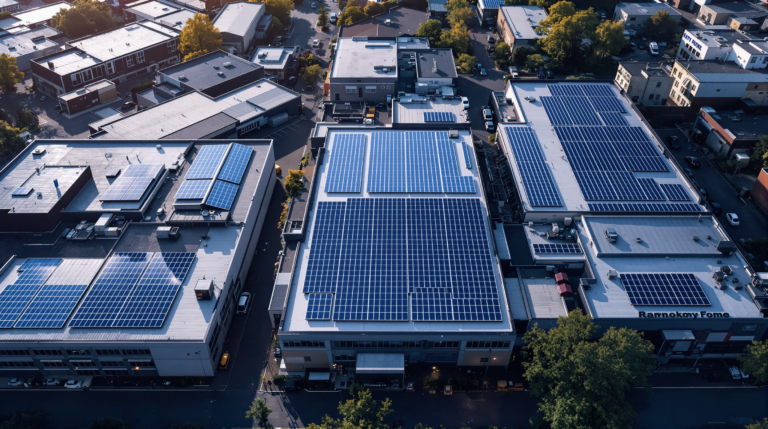
Distributed solar infrastructure is a major untapped energy investment in Europe. However, it is mostly out of reach for institutional capital. The challenge is not a lack of assets – rooftop solar installations are being deployed across commercial and industrial buildings every day. The challenge is structural. Thousands of individual systems are found across the continent. Each one is developed independently, owned locally, and operated separately. This fragmentation prevents distributed solar infrastructure from being treated as a genuine asset class. For institutional investors seeking contracted infrastructure yield, the opportunity is clear, but the pathway has been missing. The market needs platforms, not just more panels. These platforms should gather assets into portfolios that offer predictable cash flows and long-term revenue visibility.
The Scale of Distributed Solar Infrastructure in Europe
Europe’s rooftop solar potential is about two to three terawatt-peak, based on analyses from groups like SolarPower Europe. This represents several times the current installed capacity across the continent. By the end of 2024, total solar capacity in the EU will have surpassed 400 GW. A bigger part of this growth came from distributed generation on commercial and industrial rooftops. Germany, Poland, Italy, and the Netherlands are leading in the distributed segment’s deployment.
The fundamentals supporting this growth are structural rather than cyclical. Electricity prices in many EU markets are still higher than usual, Eurostat data shows. This trend is driving SMEs to consider on-site generation for more stable costs. Grid congestion is increasing the value of local generation that can be deployed without multi-year connection queues. Institutional investors are still looking for contracted infrastructure yields. This is happening as utility-scale project timelines keep getting longer. These dynamics are explored in depth acrossdistributed rooftop solar infrastructure in Europe, where the structural opportunity becomes clearer.
The asset base already exists at scale. What stops these installations from working as infrastructure is the lack of aggregation platforms. These platforms should standardise, contract, and manage them as portfolios, not just as separate projects.
Why Distributed Solar Infrastructure Remains Fragmented
The fragmentation of distributed solar infrastructure is not by chance; it shows how the market grew. Rooftop solar expanded through many transactions among building owners, local installers, and regional developers. Each installation was treated as a standalone project with its own financing, contracting, and operational arrangements. This approach worked for early deployment but creates significant barriers to institutional scale.
From an investment perspective, individual rooftop systems are difficult to underwrite. They involve varied counterparty credit quality, inconsistent technical specifications, and limited operational data. Transaction costs relative to asset size make individual acquisitions uneconomic for large capital allocators. The result is a market where substantial generation capacity exists but remains invisible to the investors who could provide long-term ownership capital. This transition from fragmented development to institutional-grade portfolios is examined further in European Solar Infrastructure: From Fragmentation to Scale.
Platforms like ENSOOL’s distributed solar platform are designed to address this structural gap. By securing long-term rooftop access, deploying standardised systems, and contracting long-duration power purchase agreements, aggregation platforms can transform scattered installations into portfolios that behave like infrastructure. The model depends on repeatability – applying the same process across hundreds of sites while maintaining operational consistency.
| Characteristic | Fragmented Market Approach | Platform Aggregation Approach |
|---|---|---|
| Asset ownership | Individual site owners | Centralised portfolio holder |
| Counterparty management | One-off contracts | Standardised PPA structures |
| Institutional accessibility | Limited due diligence capability | Portfolio-level underwriting |
| Operational data | Inconsistent and siloed | Centralised monitoring |
| Deployment timeline | Variable by project | Standardised and repeatable |
The Forward Path for Distributed Solar Infrastructure
The conditions for platform formation in distributed solar infrastructure are now converging. Rooftop solar adoption continues accelerating across Europe. Energy price volatility is pushing SMEs toward long-term supply contracts. Grid constraints are slowing down utility-scale connections. This makes distributed generation more appealing. This dynamic is explored inRooftop Solar Deployment Speed: Why Distributed Beats Utility. Institutional capital remains abundant but underallocated to the distributed segment.
The platforms that emerge from this moment will define how distributed solar infrastructure is owned and operated for decades. Success requires more than project development capability. It requires the systems, processes, and operational discipline to repeat the same deployment model across hundreds of sites, geographies, and counterparties. Execution at scale becomes the business model itself.
Markets like Poland illustrate where these dynamics align most clearly. Strong solar resources combine with supportive policy conditions, a large industrial rooftop inventory, and ongoing energy price pressure driving SME adoption. For platforms building distributed solar infrastructure portfolios, such markets offer clear pathways toward YieldCo-scale asset bases with contracted long-term revenues.
Frequently Asked Questions About Distributed Solar Infrastructure
What makes distributed solar infrastructure different from utility-scale solar?
Why is distributed solar infrastructure difficult for institutional investors to access?
How do platforms aggregate distributed solar infrastructure into portfolios?
Which European markets offer the strongest distributed solar infrastructure opportunities?
The next phase of European energy infrastructure won’t just focus on generation capacity. It will also depend on how that capacity is structured and owned. Distributed solar infrastructure is transitioning from a fragmented installation market toward a mature asset class. The platforms being built now will influence how institutions access one of Europe’s biggest renewable energy opportunities for years.