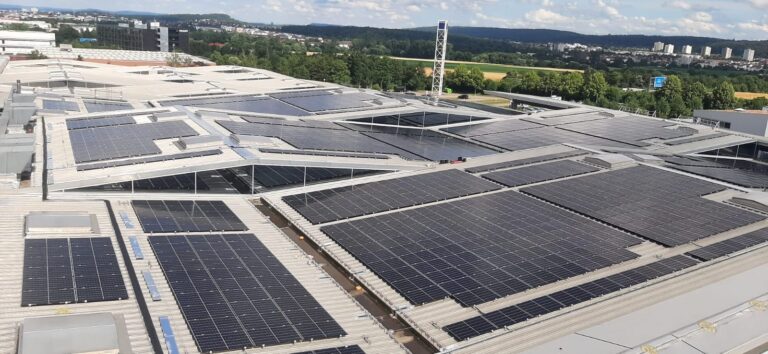
How Long to Build Utility-Scale Solar Farm in Europe: 5 Facts
How Long Does It Take to Build a Utility-Scale Solar Farm in Europe?
How long does it take to build a utility-scale solar farm in Europe? The answer, based on current industry data and project timelines across EU markets, is typically three to five years from initial development through to full commissioning. This timeline includes land acquisition, environmental impact assessments, permitting, grid connection approvals, procurement, and construction. In some markets, the process can extend beyond five years due to grid congestion, permitting backlogs, and administrative complexity. According to SolarPower Europe, grid connection queues alone can account for 12 to 36 months of delay in countries like Spain, Italy, and Germany. This reality is reshaping how investors and developers think about solar deployment – and why distributed rooftop solar infrastructure in Europe is gaining structural relevance as a faster, more predictable alternative.
Why Building a Utility-Scale Solar Farm in Europe Takes So Long
The timeline to build a utility-scale solar farm in Europe is not primarily constrained by construction. Physical installation of panels, inverters, and grid infrastructure for a 50-100 MW ground-mount project typically takes six to twelve months. The bottleneck sits upstream – in development, permitting, and grid access. Environmental impact assessments across EU member states can take 12 to 24 months. In markets like Poland and Italy, securing land-use permits involves multiple municipal and regional authorities. In Germany, grid operators face connection request backlogs that push timelines further. Industry estimates suggest that across Europe, fewer than half of solar projects in active development pipelines reach commissioning within their original planned schedule.
Regulatory frameworks add further complexity. Each EU member state maintains different permitting regimes, grid codes, and environmental review standards. The EU’s revised Renewable Energy Directive has introduced provisions to streamline permitting, designating renewable acceleration areas, but implementation varies significantly. As explored in How Energy Regulations Affect Solar Returns: 5 Critical Facts, these regulatory variables directly affect project economics and investor confidence. For institutional capital seeking contracted infrastructure yield, the unpredictability of utility-scale solar development timelines in Europe represents a material risk.
Utility-Scale Solar Farm Timelines in Europe vs. Distributed Rooftop Deployment
The contrast between utility-scale solar farm construction timelines in Europe and distributed rooftop deployment is increasingly influencing capital allocation decisions. A commercial rooftop solar installation – typically 50 kW to 1 MW – can move from site assessment to commissioning in eight to sixteen weeks. There is no land acquisition process. Environmental impact assessments are rarely required. Grid connection, where systems operate primarily behind the meter, is substantially simpler. This speed-to-revenue difference is not marginal. It is structural.
For infrastructure investors evaluating how long it takes to build a utility-scale solar farm in Europe versus deploying distributed assets at scale, the comparison extends beyond timelines. Distributed systems begin generating revenue almost immediately after installation, while utility-scale projects may carry years of development expenditure before producing any return. The trade-off, of course, is individual asset size. A single rooftop installation does not match the capacity of a ground-mount solar farm. But when aggregated into portfolios through a platform model – as ENSOOL’s distributed solar platform is designed to do – distributed assets can deliver comparable total capacity with significantly faster deployment cycles and more predictable cashflow profiles.
| Factor | Utility-Scale Solar Farm in Europe | Distributed Rooftop Solar (Aggregated) |
|---|---|---|
| Typical development-to-commissioning timeline | 3-5+ years | 8-16 weeks per site |
| Grid connection complexity | High – queue delays of 12-36 months common | Low – behind-the-meter in most cases |
| Environmental permitting | Required – 12-24 months typical | Rarely required for commercial rooftops |
| Land acquisition | Required – legal and zoning complexity | Existing buildings – lease or PPA structure |
| Revenue generation start | Years after initial development spend | Weeks after installation |
| Scalability model | Project-by-project | Platform-based, repeatable deployment |
| Counterparty diversification | Single offtaker or merchant exposure | Multiple SME offtakers across portfolio |
The Forward Outlook: Will European Utility-Scale Solar Farm Timelines Improve?
Efforts to shorten the time it takes to build a utility-scale solar farm in Europe are underway at both EU and national levels. The European Commission’s REPowerEU plan and the revised Renewable Energy Directive aim to reduce permitting timelines to a maximum of two years for standard projects and one year in designated acceleration areas. Several member states, including Germany and the Netherlands, have introduced fast-track provisions. However, implementation remains uneven. Grid infrastructure investment has not kept pace with generation capacity growth. According to industry assessments, transmission and distribution grid upgrades across Europe require hundreds of billions of euros in investment through 2030 to accommodate planned solar capacity.
This structural constraint is unlikely to resolve quickly, which means utility-scale solar construction timelines in Europe will remain extended for at least the medium term. For investors and developers seeking near-term deployment and revenue visibility, distributed solar offers a practical complement. The opportunity is not to choose one model over the other but to recognize that Distributed Solar Infrastructure: 5 Essential Platform Facts demonstrate how aggregated rooftop portfolios can fill the deployment gap while utility-scale infrastructure catches up. The distinction between these two segments – and the timeline difference in particular – is becoming a defining factor in European solar investment strategy.
Frequently Asked Questions About How Long It Takes to Build a Utility-Scale Solar Farm in Europe
What is the average construction timeline for a utility-scale solar farm in Europe?
Why do grid connection delays extend utility-scale solar timelines in Europe?
How does building a utility-scale solar farm in Europe compare to distributed rooftop deployment?
Will EU permitting reforms reduce the time to build utility-scale solar farms in Europe?
The question of how long it takes to build a utility-scale solar farm in Europe reveals more than a logistical challenge – it exposes a structural gap in how solar capacity reaches the grid. As permitting and connection timelines remain extended, distributed rooftop solar is emerging as a critical parallel pathway for European energy infrastructure. ENSOOL is building the aggregation platform to convert this fragmented asset base into institutional-grade solar portfolios, turning deployment speed and operational repeatability into a scalable infrastructure model for the decade ahead.