
How Energy Regulations Affect Solar Returns: 5 Critical Facts
How Do Energy Regulations Across EU Member States Affect Solar Project Returns?
How do energy regulations across EU member states affect solar project returns? The answer is direct: regulatory divergence across the EU creates material variance in project-level economics, influencing everything from feed-in tariff structures and permitting timelines to tax treatment, grid access rules, and PPA enforceability. For distributed rooftop solar specifically, these differences can shift internal rates of return by several percentage points between otherwise comparable markets. Understanding how energy regulations across EU member states affect solar project returns is therefore not an academic exercise – it is a core underwriting discipline. As the EU installed approximately 56 GW of new solar capacity in 2023 alone, according to SolarPower Europe, and exceeded 400 GW of total installed capacity by end of 2024, the regulatory landscape has become the primary differentiator in where capital flows and how quickly it compounds.
How Energy Regulations Across EU Member States Affect Solar Project Returns at the Market Level
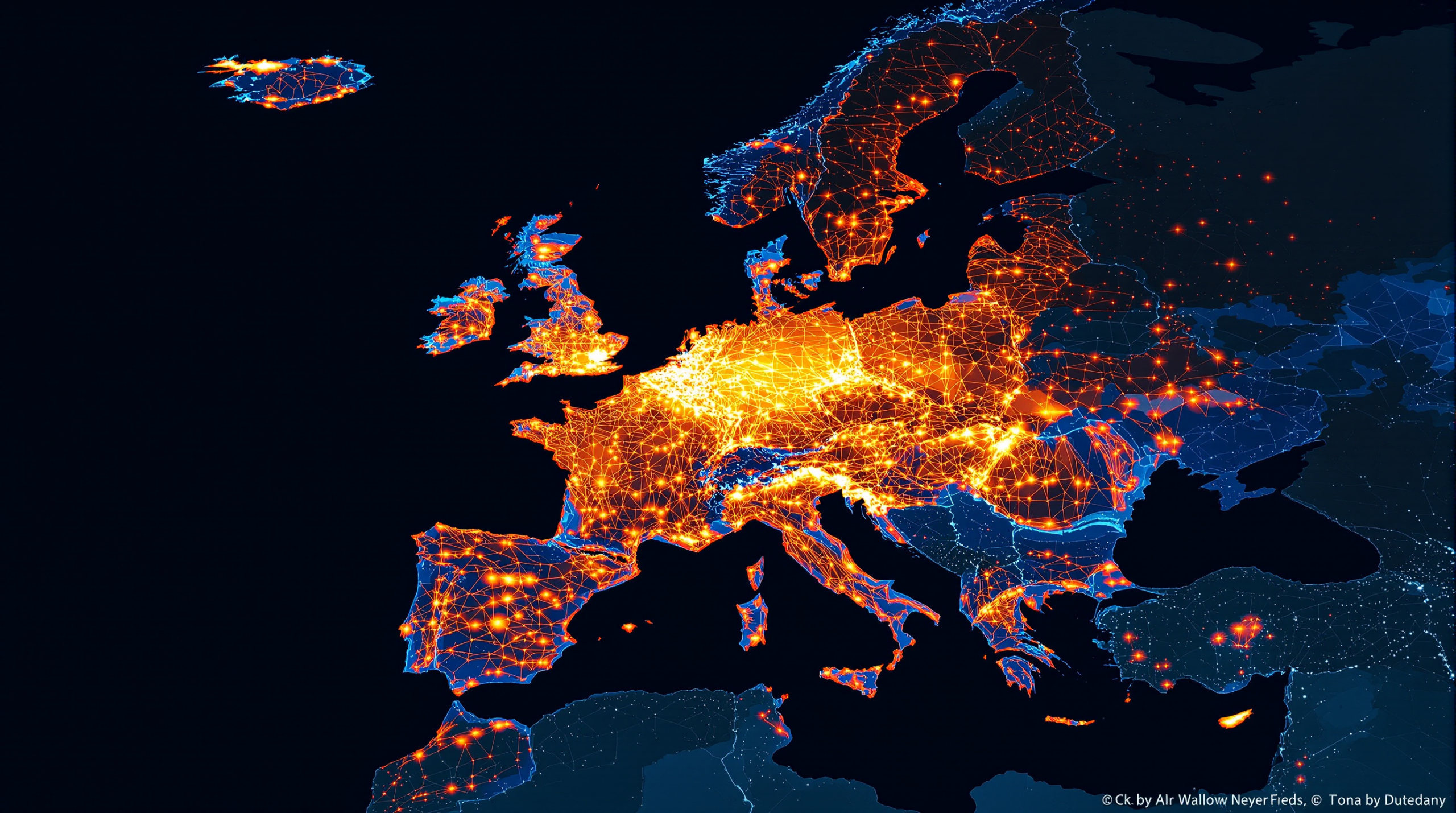
EU member states operate under a shared energy policy framework – notably the Renewable Energy Directive and the Electricity Market Design reform – but implementation is national. This creates a patchwork of regulatory environments that directly shapes project economics. In Germany, for instance, rooftop solar benefits from well-established self-consumption frameworks and relatively mature permitting processes, though grid charges and levy structures have evolved considerably over time. Poland, by contrast, offers strong net-billing incentives and a large untapped industrial rooftop base, but developers must navigate a different permitting cadence and evolving prosumer regulations.
Italy, the Netherlands, Spain, and France each present their own regulatory configurations. Spain’s shift away from the former “sun tax” unlocked rapid deployment, while Dutch SDE++ subsidy rounds have driven consistent commercial and industrial installation pipelines. Each configuration creates a distinct return profile for the same underlying technology. A 500 kWp rooftop system on a logistics warehouse may yield very different investor returns depending on whether it sits in Rotterdam, Milan, or Warsaw – not because of irradiance or panel efficiency, but because of how energy regulations across EU member states affect solar project returns through tax depreciation schedules, grid connection costs, and revenue certainty mechanisms.
This regulatory fragmentation is a key reason why distributed rooftop solar infrastructure in Europe remains difficult to scale as a single asset class. Each market requires localised regulatory expertise, which adds cost and complexity to cross-border portfolio construction.
Regulatory Drivers That Shape How Energy Regulations Affect Solar Returns
Several specific regulatory categories determine how energy regulations across EU member states affect solar project returns in practice. Permitting timelines are among the most impactful. The EU’s revised Renewable Energy Directive introduced accelerated permitting for rooftop solar, but national transposition varies. Some member states have implemented fast-track approvals for systems under 50 kWp, while others still require full building permits regardless of system size. Longer permitting translates directly into delayed revenue and higher development costs.
PPA frameworks matter equally. In markets where corporate PPAs are well-established and legally standardised, long-term revenue visibility improves significantly, which in turn compresses the cost of capital. Markets with immature PPA frameworks or regulatory ambiguity around sleeving and virtual PPAs create uncertainty that investors price into their return expectations. Grid access and connection rules also play a central role, as explored in detail in Distributed Solar Infrastructure: 5 Essential Platform Facts. Distributed systems that generate and consume on-site can bypass grid congestion – a growing advantage as connection queues for utility-scale projects stretch for years in several EU markets.
Tax treatment rounds out the picture. Accelerated depreciation, VAT exemptions on solar equipment, and investment tax credits differ substantially across member states. These fiscal mechanisms can shift after-tax returns by 100 to 300 basis points, making tax policy a decisive variable in cross-border solar investment decisions.
| Regulatory Factor | Harmonised EU Market (Scenario A) | Fragmented National Markets (Current Reality) |
|---|---|---|
| Permitting Timeline | Standardised fast-track across all member states | Varies from weeks to months depending on jurisdiction |
| PPA Legal Framework | Uniform corporate PPA structures | Mature in some markets, nascent in others |
| Grid Access Rules | Consistent connection standards and timelines | Significant queue variation and local grid operator discretion |
| Tax Treatment | Aligned depreciation and VAT rules | Depreciation periods range from 5 to 20 years across countries |
| Impact on IRR Spread | Narrow return variance across geographies | Multi-percentage-point IRR differences for identical systems |
Forward Outlook: How Energy Regulations Across EU Member States Will Shape Solar Returns Through 2030
The trajectory is toward greater regulatory convergence, but the pace is uneven. The EU’s REPowerEU plan and updated Renewable Energy Directive set ambitious targets, including a push toward streamlined permitting and enhanced frameworks for energy sharing. If fully transposed, these measures would reduce regulatory friction and narrow the return dispersion that currently exists across member states.
However, national implementation remains the bottleneck. Each member state interprets and transposes directives according to local political, grid, and market conditions. For institutional investors evaluating how energy regulations across EU member states affect solar project returns over the next five to ten years, the key question is not whether harmonisation will occur, but how fast – and which markets will lead. Platforms capable of navigating this complexity through standardised processes and localised regulatory expertise are positioned to capture disproportionate value, as outlined in Solar Infrastructure Platform: 7 Essential Benefits Now.
Electricity prices across many EU markets remain structurally above the averages of the prior decade, according to Eurostat. This price environment reinforces the economic case for on-site solar generation, particularly for SMEs seeking cost predictability. As regulatory environments continue to mature, the distributed solar segment is transitioning from fragmented project development toward scalable portfolio infrastructure.
Frequently Asked Questions About How Energy Regulations Across EU Member States Affect Solar Project Returns
Which EU regulations most directly affect solar project returns?
How do EU energy regulations create IRR variance for solar investments?
Which EU member states offer the strongest regulatory environment for distributed solar returns?
Will EU regulatory harmonisation reduce solar return dispersion across member states?
The question of how energy regulations across EU member states affect solar project returns will remain central to infrastructure capital allocation throughout this decade. As regulatory environments mature unevenly, the ability to aggregate distributed solar assets across multiple jurisdictions – while managing regulatory complexity at scale – becomes a defining competitive advantage. This is precisely the structural gap that ENSOOL’s distributed solar platform is designed to address: turning fragmented rooftop assets into institutional-grade infrastructure portfolios with long-term contracted revenue, regardless of which member state the rooftop sits in.


