Poland Solar Market Expansion: 7 Critical Insights Now
Poland Solar Market Expansion: Europe’s Next Infrastructure Frontier
Poland solar market expansion represents one of the most significant distributed energy opportunities in Europe today. The country has strong solar irradiance, many industrial rooftops, and high energy prices. These factors are speeding up commercial solar adoption, outpacing most Western European markets. SolarPower Europe reported that Poland added about 4.6 GW of new solar capacity in 2023. Much of this growth came from distributed installations on commercial and industrial buildings. For institutional investors and infrastructure developers seeking exposure todistributed rooftop solar infrastructure in Europe, Poland now offers a rare combination of scale, urgency, and deployability that few other markets can match.
Why Poland Solar Market Expansion Matters for Infrastructure Capital
The fundamentals driving Poland solar market expansion are structural rather than cyclical. Poland still relies a lot on coal for electricity. Thermal plants make up a big part of the country’s energy mix. This puts pressure on companies to decarbonise and encourages them to rely less on the grid. Polish electricity prices for non-household consumers have remained elevated relative to the pre-2021 baseline, according to Eurostat data, making on-site generation increasingly attractive for SMEs seeking cost stability.
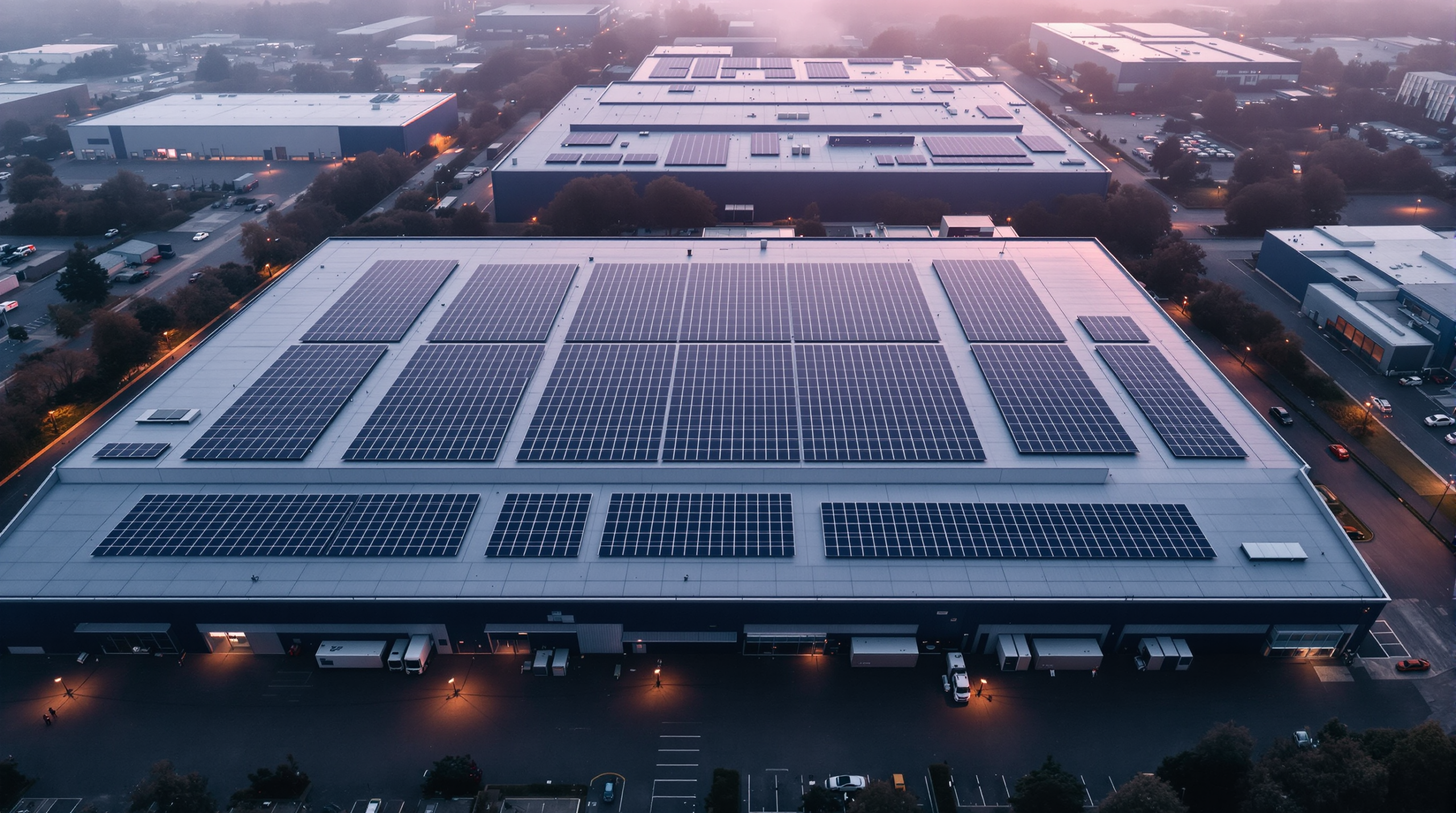
Poland’s commercial and industrial building stock provides substantial rooftop capacity that remains largely untapped. Warehouses, logistics centres, and manufacturing facilities nationwide provide great spots for solar energy. They have large, flat rooftops that get plenty of sunlight and use a lot of energy. Industry estimates suggest Poland’s total rooftop solar potential exceeds 30 GW, yet only a fraction of this capacity has been developed. The gap between potential and deployment shows the key chance for platforms that can gather distributed assets on a large scale.
What distinguishes Poland from more mature Western European solar markets is the combination of growth velocity and market fragmentation. Countries like Germany and the Netherlands have more installed capacity. However, their markets are becoming more competitive and consolidated. Poland’s solar market is still growing. There’s a chance for platforms to grab a big share before things settle down. This timing advantage is critical for infrastructure strategies focused on long-term portfolio building.
Structural Challenges in Scaling Poland Solar Market Expansion
Despite favorable fundamentals, scaling distributed solar in Poland presents distinct challenges. The market remains highly fragmented, with most installations developed by local integrators serving individual sites. This fragmentation creates inefficiencies across the value chain – from procurement and permitting to operations and maintenance. For institutional capital, these dynamics make direct investment difficult because individual assets are too small to underwrite efficiently.
Grid infrastructure presents another consideration. Distributed rooftop systems avoid many connection queue problems seen in utility-scale projects. However, in some areas of Poland, the distribution networks need upgrades to support increasing distributed generation. Systems installed behind the meter for self-consumption have fewer limits. They lower grid load during peak generation hours instead of raising it.
The commercial structure of Polish solar projects also differs from Western European norms. Long-term power purchase agreements with SME counterparties require careful credit assessment and contract structuring. Platforms like ENSOOL’s distributed solar platform are specifically designed to address these structural gaps, standardising deployment processes while building portfolios with diversified counterparty exposure. As documented in analyses of European Solar Infrastructure: From Fragmentation to Scale, the transition from project-by-project development to portfolio aggregation defines whether distributed solar can be treated as institutional infrastructure.
Forward Outlook for Poland Solar Market Expansion
The trajectory of Poland solar market expansion points toward continued acceleration through 2025 and beyond. EU decarbonisation targets and a focus on energy security boost renewable energy efforts. The REPowerEU framework highlights distributed generation as a key focus. Rooftop solar is specifically noted as a quick deployment option.
For infrastructure investors, the key question is no longer if Poland will grow in solar energy, but how that growth will happen. Markets that grow through scattered development offer different investment chances compared to those where aggregation platforms take control early. Poland is at a key moment where forming platforms on a large scale is still possible.
The economics of Poland solar market expansion are also improving. Equipment costs keep going down, and there are more workers available for solar installation as the market grows. Supply-side improvements and ongoing demand-side drivers suggest that deployment speed will rise instead of level off soon.
| Factor | Poland | Western Europe Average |
|---|---|---|
| Market maturity | Growth phase – platform formation opportunity | Mature – consolidation underway |
| Rooftop potential vs. deployment | Large gap – significant untapped capacity | Moderate gap – higher penetration rates |
| Energy price pressure on SMEs | High – coal-dependent grid, elevated prices | Moderate – more diversified generation mix |
| Competitive intensity | Fragmented – local integrators dominate | Consolidated – established platforms active |
| Policy tailwinds | Strong – decarbonisation and energy security aligned | Strong – established support frameworks |
Frequently Asked Questions About Poland Solar Market Expansion
What is driving Poland solar market expansion in 2025?
How does Poland solar market expansion compare to Germany or the Netherlands?
What are the main barriers to scaling solar in Poland?
Is Poland solar market expansion attractive for institutional investors?
Poland solar market expansion reflects a broader pattern across Central and Eastern Europe, where energy transition needs and infrastructure investment opportunity increasingly align. For platforms built to aggregate distributed solar into institutional-scale portfolios, the Polish market offers precisely the conditions required for meaningful portfolio formation – scale, urgency, and structural gaps that systematic approaches can address. As the market matures, early platform positioning will determine which strategies capture the long-term value embedded in Europe’s distributed rooftop infrastructure.