What Due Diligence Checklist Applies Now? 5 Critical Steps
What Due Diligence Checklist Applies to Solar Infrastructure Investment?
What due diligence checklist applies to solar infrastructure investment? For institutional investors and infrastructure fund managers evaluating solar assets, the answer spans five core domains: technical asset quality, counterparty creditworthiness, regulatory and permitting compliance, revenue structure and contract terms, and portfolio-level risk diversification. Each domain carries specific line items that differ depending on whether the investment targets utility-scale projects or distributed rooftop portfolios. As the European solar market matures – with total installed capacity exceeding 400 GW by the end of 2024, according to SolarPower Europe – the due diligence framework must evolve beyond single-asset evaluation toward portfolio-level infrastructure analysis. This is particularly true for distributed rooftop solar infrastructure in Europe, where asset fragmentation demands a more structured, platform-driven approach to investment screening.
Core Elements of a Due Diligence Checklist for Solar Infrastructure Investment
A robust due diligence checklist for solar infrastructure investment starts with technical assessment. This includes equipment specifications, panel degradation assumptions, inverter performance ratios, and historical yield data where available. For distributed portfolios, technical due diligence must also evaluate roof structural integrity, lease or access agreements, and the standardisation of installation processes across multiple sites. Investors should confirm that independent energy yield assessments have been performed using bankable meteorological data, ideally from sources like Meteonorm or SolarGIS.
The second pillar is counterparty and credit analysis. In distributed solar, this means evaluating the financial health of each power purchase agreement (PPA) offtaker – typically an SME or commercial tenant. The aggregated credit profile of the portfolio matters as much as any single counterparty. Investors examining this area in depth should review how counterparty risk in long-term solar PPAs is managed, particularly when portfolios span hundreds of sites with diversified offtakers.
Third, regulatory due diligence covers grid connection permits, building permits, environmental compliance, and local energy regulation. In markets like Germany, Poland, Italy, and the Netherlands, distributed solar operates under different regulatory frameworks. A thorough solar infrastructure investment due diligence checklist must account for jurisdiction-specific permitting requirements and any subsidy or feed-in-tariff dependencies that affect revenue certainty.
Why the Due Diligence Checklist Differs for Distributed vs. Utility-Scale Solar Infrastructure
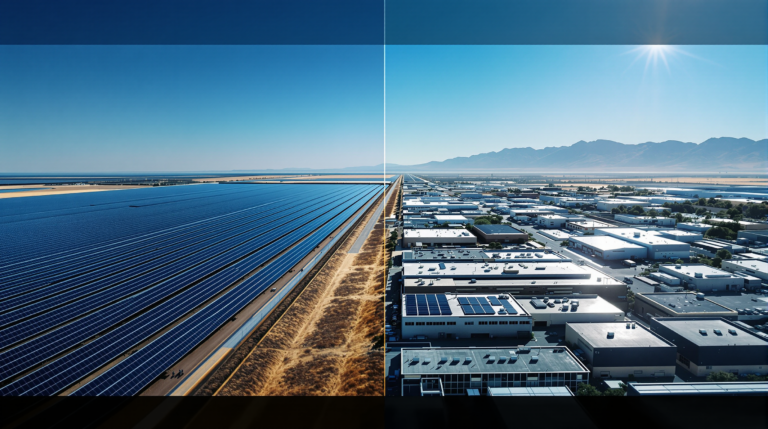
The due diligence checklist that applies to solar infrastructure investment changes substantially depending on asset type. Utility-scale solar projects concentrate risk in fewer, larger assets with single-point grid connections. Distributed rooftop portfolios, by contrast, spread risk across many smaller assets but introduce complexity in aggregation, contract management, and operational consistency.
For distributed solar, the checklist must include portfolio-level analytics: geographic diversification, counterparty concentration limits, weighted average PPA tenor, and churn risk assumptions. These are the same metrics that make an asset class legible to infrastructure capital. According to the IEA, distributed generation is expected to account for a growing share of new solar capacity globally, which means institutional due diligence frameworks must adapt to evaluate these assets on their own terms rather than applying utility-scale templates.
Understanding what realistic returns look like in this segment is also part of informed due diligence. Investors should benchmark expected performance against what the market actually delivers, as explored in analysis of realistic ROE for solar infrastructure funds in Europe.
| Due Diligence Dimension | Utility-Scale Solar | Distributed Rooftop Solar Portfolio |
|---|---|---|
| Asset Concentration | Single or few large sites | Hundreds of smaller sites across geographies |
| Counterparty Risk | Typically one utility or corporate offtaker | Diversified SME offtakers; portfolio credit analysis required |
| Permitting Complexity | High – grid queue, environmental impact, land use | Lower per site – but must be repeatable at scale |
| Revenue Visibility | Long-term PPA or merchant exposure | Contracted PPA cashflows with portfolio-level predictability |
| Deployment Timeline | Years (grid connection bottlenecks) | Weeks to months per site; faster capital deployment |
| Key Due Diligence Focus | Site-specific technical and environmental risk | Platform consistency, aggregation model, operational scalability |
Forward Outlook: How the Solar Infrastructure Investment Due Diligence Checklist Will Evolve
As distributed solar moves from a fragmented installation market toward a structured asset class, the due diligence checklist for solar infrastructure investment will increasingly emphasise platform-level evaluation. Investors will need to assess not just individual assets, but the operating model that produces them. Can the platform deploy standardised systems across multiple markets? Are PPA contracts structured with consistent terms? Is there operational control over maintenance, monitoring, and performance guarantees at scale?
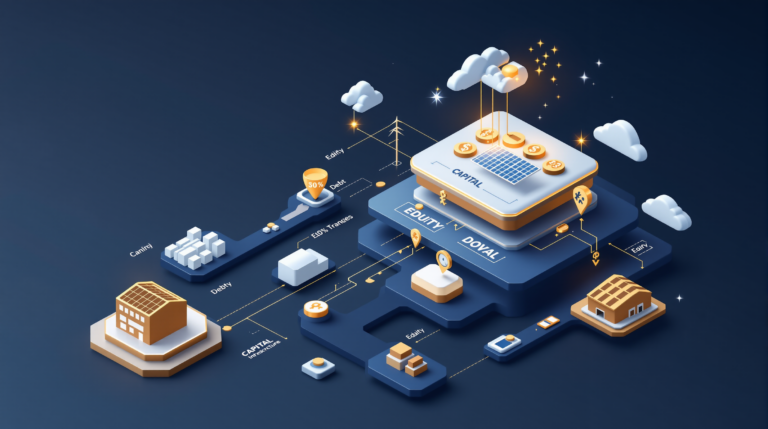
This shift mirrors what has already happened in other infrastructure segments. Fibre networks, data centres, and logistics real estate all moved through a phase where fragmented assets were aggregated into institutional portfolios. Distributed solar is entering that same transition. The checklist that applies to solar infrastructure investment in 2025 and beyond must therefore include platform-level criteria: deployment repeatability, technology standardisation, data infrastructure, and the capacity to manage hundreds of assets as a single portfolio. Platforms like ENSOOL’s distributed solar platform are being built specifically around this aggregation thesis, turning fragmented rooftop installations into long-duration infrastructure with contracted cashflows.
Industry estimates suggest that more than $15 trillion in global infrastructure investment will be needed by 2040, with a growing share directed toward energy transition assets. For distributed solar to capture meaningful institutional allocation, the due diligence process must be as rigorous and standardised as the assets themselves.
Frequently Asked Questions
What due diligence checklist applies to solar infrastructure investment in distributed portfolios?
How does solar infrastructure due diligence differ from utility-scale project assessment?
What counterparty risks should investors check in a solar infrastructure investment?
Why is platform evaluation part of the solar infrastructure investment due diligence checklist?
The due diligence checklist that applies to solar infrastructure investment is no longer static. As distributed rooftop solar matures into an institutional asset class across Europe, the evaluation framework must expand beyond site-level analysis to encompass platform capability, portfolio construction, and operational scalability. The structural gap between available assets and deployable capital is closing – but only where aggregation, standardisation, and long-term contract discipline converge into a single operating model. That convergence is what will define the next generation of solar infrastructure platforms.