What are the biggest challenges in solar farm development? 7 Critical Barriers Now
What Are the Biggest Challenges in Solar Farm Development?
What are the biggest challenges in solar farm development? The answer extends far beyond panel costs or engineering complexity. Across Europe, solar farm development challenges now centre on grid connection delays, permitting bottlenecks, land access constraints, and the structural difficulty of scaling fragmented distributed assets into investable portfolios. According to SolarPower Europe, the EU installed approximately 56 GW of new solar capacity in 2023 alone, yet a significant share of planned projects face multi-year delays before reaching commercial operation. For institutional investors and infrastructure fund managers, understanding these barriers is essential because they directly shape deployment timelines, risk profiles, and long-term return visibility. The challenges differ substantially depending on whether projects are utility-scale ground-mount installations or distributed rooftop systems, and that distinction increasingly determines where capital flows.
Understanding the Biggest Challenges in Solar Farm Development Across Europe
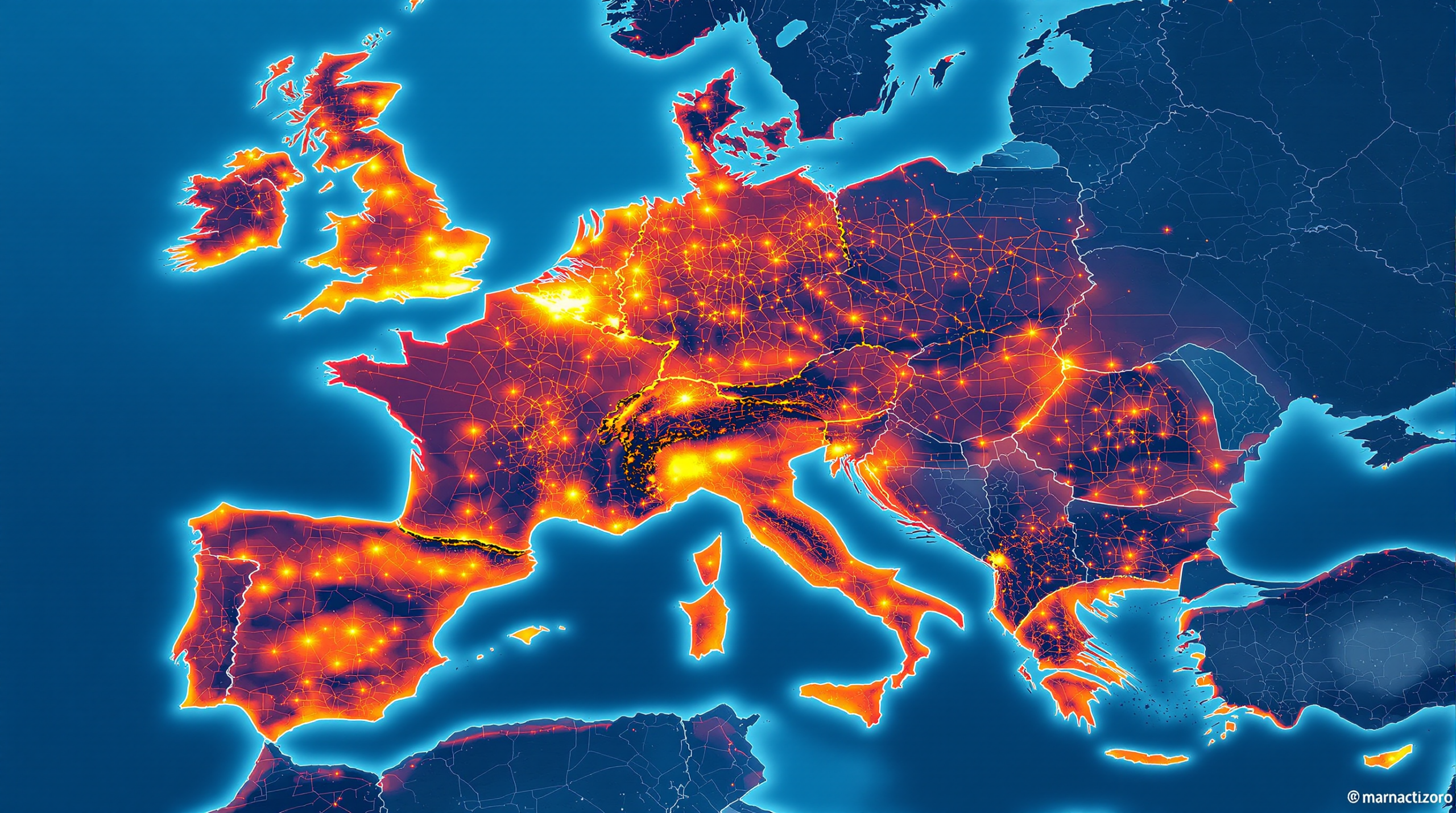
The solar development landscape in Europe has shifted dramatically. A decade ago, the primary constraint was cost. Today, with module prices at historic lows and levelized costs competitive with conventional generation, the biggest challenges in solar farm development are structural rather than technological. Grid infrastructure has not kept pace with deployment ambitions. In markets like Germany, Spain, and Italy, grid connection queues for utility-scale projects can stretch three to five years. This bottleneck alone delays revenue generation and ties up capital in pre-development phases far longer than investors anticipate.
Permitting complexity adds another layer. Each European market operates under different regulatory frameworks, environmental assessment requirements, and local planning processes. A project that takes six months to permit in the Netherlands may take two years in parts of Southern Europe. For developers attempting to build at scale, this inconsistency introduces execution risk that is difficult to model and harder to mitigate. The challenge compounds when projects require land-use changes, archaeological surveys, or environmental impact assessments that vary by jurisdiction.
Land access itself remains a persistent barrier. Competition for suitable sites – flat terrain, proximity to grid infrastructure, minimal shading – has intensified as solar deployment accelerates. Agricultural land protections in countries like France and Poland further constrain the available development footprint. These solar development obstacles collectively explain why, despite strong demand and favourable economics, a significant share of planned capacity never reaches construction. Understanding the full scope of distributed rooftop solar infrastructure in Europe helps contextualise why distributed models are gaining ground as an alternative pathway.
Why Solar Farm Development Challenges Differ Between Utility-Scale and Distributed Models
Not all solar development challenges are created equal. The barriers facing a 100 MW ground-mount project differ fundamentally from those affecting a portfolio of 200 commercial rooftop installations. Recognising this distinction is critical for capital allocators evaluating where to deploy within the solar value chain.
| Challenge Area | Utility-Scale Solar Farms | Distributed Rooftop Solar |
|---|---|---|
| Grid Connection | Multi-year queue; requires transmission-level access | Behind-the-meter; minimal grid dependency |
| Permitting Timeline | 12-36 months typical across EU markets | Weeks to months; simpler regulatory path |
| Land/Site Access | Competitive; agricultural land restrictions apply | Existing commercial rooftops; no land-use conflict |
| Capital Deployment Speed | Slow; large upfront commitments before revenue | Faster deployment; revenue begins post-commissioning |
| Scalability Constraint | Site-specific; each project is unique | Fragmentation; requires aggregation platform |
Utility-scale projects carry concentration risk – a single permitting denial or grid delay can stall an entire investment. Distributed solar faces a different problem: fragmentation. Each rooftop installation is small, independently owned, and operationally disconnected. The challenge is not building one system but building hundreds with consistent quality, standardised contracts, and aggregated cashflows. As explored in Solar Infrastructure Platform: 7 Essential Benefits Now, platform-based approaches are emerging to address precisely this structural gap. Without aggregation, distributed solar assets remain invisible to institutional capital despite their collective scale.
Overcoming Solar Farm Development Challenges – The Path Forward
Solving the biggest challenges in solar farm development requires more than policy reform or faster permitting. It requires a structural shift in how solar assets are developed, owned, and operated. For utility-scale projects, progress depends on grid infrastructure investment and regulatory harmonisation across EU member states. According to the IEA, Europe needs to roughly double its annual grid investment to accommodate planned renewable capacity through 2030.
For distributed solar, the path forward is different. The assets already exist at massive scale across Europe’s commercial and industrial building stock. Industry estimates suggest Europe holds approximately 2-3 TWp of rooftop solar potential, several times current installed capacity. The constraint is not deployment but structure. Most rooftop systems remain locally developed, independently financed, and operationally siloed. As detailed in Scaling Global Solar Infrastructure: 3 Critical Barriers, turning these fragmented installations into institutional-grade portfolios requires repeatable processes, standardised contracts, and long-term PPA structures that provide revenue predictability.
Energy price dynamics reinforce the urgency. According to Eurostat, non-household electricity prices across the EU remain structurally above the averages of the previous decade. For SMEs, on-site solar generation offers pricing visibility and reduced exposure to wholesale market volatility. This demand-side pull is accelerating rooftop adoption, but without aggregation infrastructure, the resulting asset base remains difficult for institutional investors to access. ENSOOL’s distributed solar platform is positioned around this exact transition – turning thousands of individual rooftop installations into structured, portfolio-grade infrastructure with long-duration contracted cashflows.
Frequently Asked Questions
What are the biggest challenges in solar farm development for institutional investors?
How do solar development challenges differ between utility-scale and rooftop projects?
Why is grid congestion a major challenge in solar farm development across Europe?
What solutions are emerging to address solar farm development obstacles?
The biggest challenges in solar farm development are no longer about technology or cost – they are about structure, access, and scalability. As Europe’s energy transition accelerates, the market is moving from isolated project development toward platform-driven infrastructure formation. Distributed rooftop solar, with its vast untapped potential and faster deployment timelines, is at the centre of this shift. Platforms capable of aggregating fragmented assets into standardised, contracted portfolios will define the next phase of European solar infrastructure – turning what was once a collection of small installations into a durable, institutional-grade asset class.